Tag: debt

  • Decide How You Want to Save

    Decide How You Want to Save

    Post 4 in the “How to Get Started Managing Your Personal Finances” Series


    Why It Matters

    Once you’ve built your emergency fund and made progress on paying down debt, the next step is creating a savings plan that reflects your values, goals, and lifestyle. Saving money isn’t just about putting cash aside—it’s about deciding what kind of future you want and building the habits that will get you there.

    The key is to make saving feel personal, intentional, and rewarding.


    Step 1: Get Clear on What You’re Saving For

    Think beyond “I should save.” Ask yourself:

    • What do I want my life to look like in 1 year? 5 years? 10 years?
    • How long do I want to work?
    • Do I want more flexibility in my job? More travel? A bigger home? Less stress?
    • What do I want to be prepared for—emergencies, retirement, kids’ college, a dream vacation?

    Write down your goals and bucket them into short-term (within 1 year), medium-term (1–5 years), and long-term (5+ years).
    Retirement may feel far off, but the earlier you start, the easier it is to build a strong foundation.


    Step 2: Build Your Savings Buckets

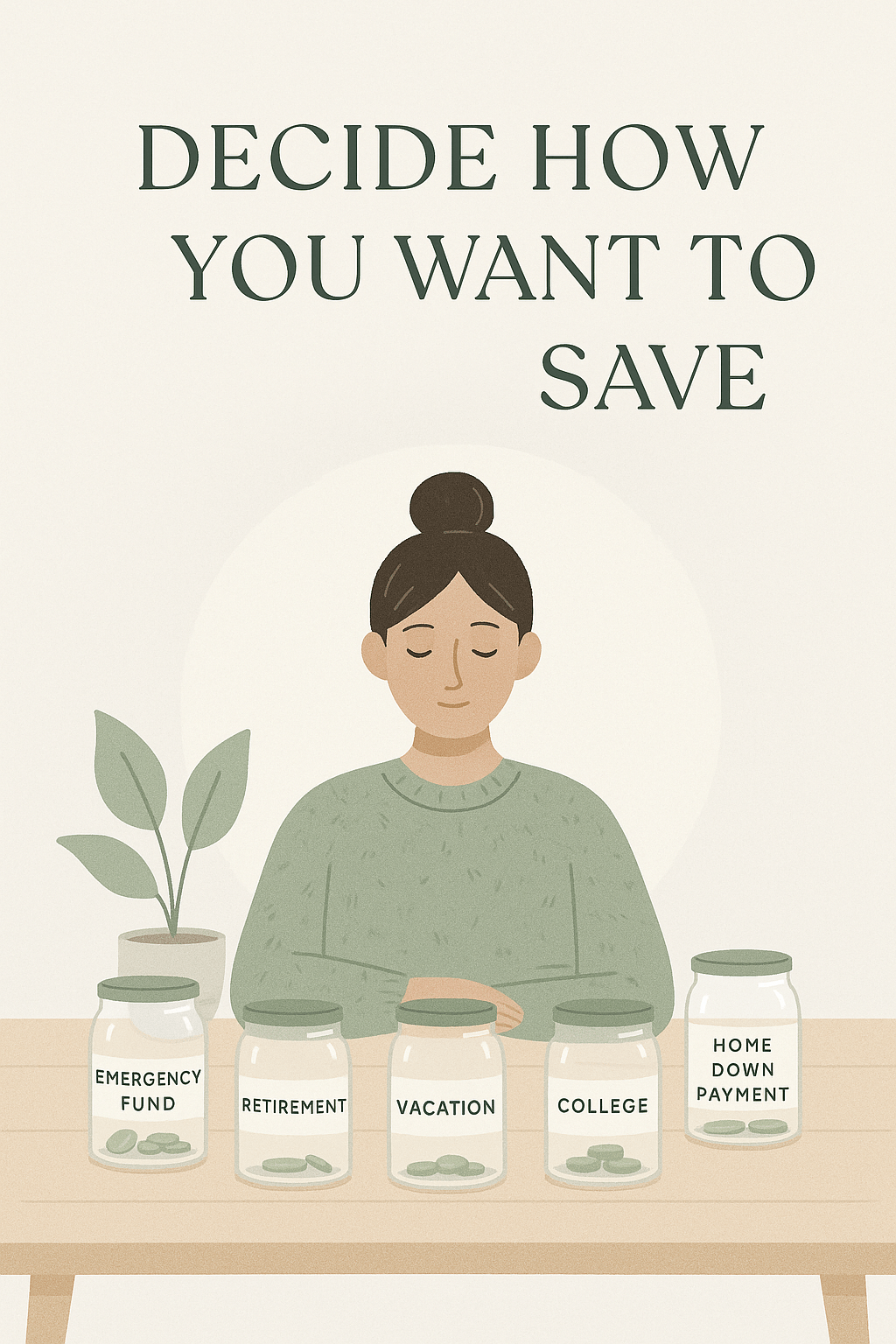
    Not all savings are created equal. Consider setting up separate savings “buckets” or sub-accounts for:

    • Emergency Fund (if not already complete)
    • Retirement (401(k), Roth IRA, or Traditional IRA)
    • Medical Expenses (HSA if your plan qualifies)
    • Home Repairs or Down Payment
    • Vacation Fund
    • Car Replacement
    • Big Dreams or Future Projects
    • Children’s college fund (529)

    Prioritize these based on your goals. Naming these accounts makes your goals feel more real. You’re not just saving—you’re actively designing your life.


    Step 3: Calculate How Much You Need to Save

    Clarity creates motivation. For each goal, calculate:

    • How much you need
    • When you want to reach it
    • Your monthly savings target

    Example:
    You want to buy a $300,000 house with a 20% down payment ($60,000) in two years. That’s $2,500/month.

    If that number feels too high:

    1. Look at your spending—can you reduce costs like eating out?
    2. Find ways to increase income—can you babysit, pet sit, or freelance?
    3. Reevaluate your timeline or goal—maybe you lower the down payment to 10% ($30,000), reducing your target to $1,250/month.

    In some cases, a higher mortgage with PMI may still cost less than rent. If so, you can work on paying down the extra mortgage principal after buying the home to remove PMI.

    For retirement, aim to contribute at least enough to get your employer match. As your income grows, increase your contributions. If early retirement is your goal, work backward from your desired retirement age and calculate what you’ll need to save each year.

    Clear goals help you stay focused—and avoid frustration. Saving $25/month won’t get you to a $60,000 goal in two years, and unrealistic plans can cause you to give up.


    Step 4: Choose the Right Tools

    Where you keep your savings matters:

    • High-yield savings accounts: Ideal for your emergency fund and short-term goals
    • Money market accounts: Great for medium-term savings like home repairs or car funds
    • Certificates of Deposit (CDs): Useful if you won’t need the money for a fixed time
    • Retirement accounts: Use tax-advantaged accounts like a 401(k), Roth IRA, or Traditional IRA for long-term investing
    • Investment accounts: Consider for long-term goals beyond retirement, like generational wealth or college savings

    Every dollar should have a purpose—and a smart place to grow.


    Step 5: Keep Checking In

    Your savings plan should grow and evolve with you. Review it every few months:

    • Are your goals still aligned with your values?
    • Do you need to shift more money toward a new priority?
    • Can you increase your contributions, especially to retirement?

    The earlier and more consistently you save for retirement, the more options you give your future self.


    Reflection Prompt:
    What’s one thing you want to save for that would make your life feel more meaningful, less stressful, or more free in the future?
  • How to Tackle Credit Card Debt

    How to Tackle Credit Card Debt

    Related to Post 3 in the “How to Get Started Managing Your Personal Finances” Series


    Why It Matters

    Credit card debt can feel overwhelming—like you’re stuck in a cycle you can’t escape. The high interest rates, minimum payments, and constant stress can make it hard to breathe, let alone plan for the future. Credit card debt is its own monster. The interest rates they charge if you do not pay the full balance are predatory.

    But you are not powerless. No matter how big the number, you can take control of your debt. The goal isn’t just to pay it off—it’s to regain peace of mind and create a life with more freedom and fewer financial emergencies.

    Let’s walk through the steps.


    Step 1: Stop Adding to the Debt

    If you’re serious about getting out of debt, the first step is to stop using your credit cards.

    • Remove them from your wallet
    • Delete them from Apple Pay
    • Unsubscribe from shopping emails that tempt you to spend

    Set yourself up to succeed by removing the daily triggers.


    Step 2: Get Clear on the Numbers

    Make a list of:

    • Each credit card you have
    • The current balance
    • The interest rate
    • The minimum monthly payment

    Yes, it might feel scary. But seeing the full picture gives you the power to make a plan.


    Step 3: Create a Bare-Bones Budget

    This doesn’t have to be forever—but for now, cut your spending down to the essentials:

    • Housing
    • Groceries
    • Transportation
    • Utilities

    The goal is to free up as much money as possible to start attacking your debt.


    Step 4: Pick a Payoff Strategy

    There are two popular strategies:

    1. Debt Avalanche:
    Focus on the card with the highest interest rate first. You’ll pay less in interest over time.

    2. Debt Snowball:
    Pay off the smallest balance first. This gives you early wins and motivation to keep going.

    Neither is “better”—just pick the one that works best for your mindset.


    Step 5: Ask for Help (Really)

    Call your credit card companies and ask:

    • Can you lower my interest rate?
    • Do you offer a hardship program?
    • Can you waive late fees?

    You might be surprised—many companies are willing to work with you if you’re honest and proactive.


    Step 6: Consider a Balance Transfer or Debt Consolidation

    If you have decent credit, a 0% APR balance transfer card could give you time to pay down your debt without interest.
    Or look into a debt consolidation loan to combine all your credit card balances into one monthly payment at a lower rate.

    But be cautious: these only work if you’re committed to paying them off before the promotional period ends!


    Step 7: Increase Your Income (Even Temporarily)

    Even an extra $100 a month can make a difference. Consider:

    • Freelance or gig work like pet sitting, babysitting, or Instacart
    • Selling unused items around the house
    • Asking for extra hours at work

    Every dollar helps build momentum.

    Step 8: Stay Consistent—and Be Kind to Yourself

    Getting out of credit card debt isn’t just a math problem—it’s an emotional journey.
    You might mess up. You might feel discouraged. That’s okay.

    What matters is that you keep going. And don’t forget to reward yourself along the way.
    If you have multiple debts, celebrate each time you knock one off your list! It takes time and dedication, but the faster you address your debt, the better.

    Keep your long-term goals in front of you to stay motivated (remember those goals I asked you to think about in Post 1?)


    You deserve to feel free from the weight of debt.
    This isn’t about being perfect—it’s about progress. And every single payment is a step toward the life you really want.


  • How to Tackle Your Debt (Without Losing Your Sanity)

    How to Tackle Your Debt (Without Losing Your Sanity)

    Post 3 in the “How to Get Started Managing Your Personal Finances” Series


    Why It Matters Debt can feel like a heavy weight on your shoulders—something you try to ignore—until the bills are due or your credit card is maxed out. But it doesn’t have to be that way. Getting out of debt isn’t just about numbers—it’s about creating space to breathe, make choices, and stop feeling stuck.

    You’re not alone. Many of us carry debt, whether it’s from student loans, credit cards, or unexpected life events. What matters is how you respond once you see the full picture.


    First: Build a Small Emergency Fund Before you dive headfirst into paying off debt, it’s important to create a small financial safety net. Why? Because life will happen—cars break down, kids get sick, jobs shift. If you don’t have any savings, you’re more likely to fall back on credit cards and undo your hard work.

    💡 Start by saving $500 to $1,000 in a separate savings account. This doesn’t have to happen overnight. Even $20 a week adds up. Once you have that mini emergency fund in place, you can focus more confidently on paying down debt.


    Step 1: List All Your Debts Create a simple list of:

    • Who you owe
    • How much you owe
    • The interest rate
    • The minimum monthly payment

    You can use a notebook, a spreadsheet, or a budgeting app—whatever feels simple and sustainable for you.

    If you have a lot of credit card debt, I made a post to specifically address this, see it here.

    📋 Tip: This step isn’t about judgment. It’s just about getting a clear picture.


    Step 2: Choose a Strategy That Works for You There are two popular methods to pay off debt:

    1. The Snowball Method
    Focus on your smallest debt first, while making minimum payments on the rest. Once that’s paid off, roll that payment into the next smallest debt.
    → Great for motivation and quick wins.

    2. The Avalanche Method
    Focus on the debt with the highest interest rate first to save more over time.
    → Most efficient financially, though it may take longer to feel progress.

    🎯 Choose the one that keeps you going. There’s no one “right” answer—only what works for your mindset.

    And keep in mind—not all debt is bad. For example, if you have a mortgage with a 3.5% interest rate, it usually doesn’t make sense to rush to pay it off. You’re often better off investing that money and potentially earning a 7% return over time.


    Step 3: Find Extra Money to Pay Toward Debt Now that you’ve tracked your spending (remember Post 2?), look for expenses to cut or reduce. Cancel an unused subscription. Eat at home one more night a week. Sell something sitting in your garage.

    Decide what small sacrifices you’re willing to make now to reach your long-term goals. For me, this looked like working out at home instead of in a gym, not buying new clothes for a while, learning how to cook at home instead of eating out, and shopping around for cheaper car insurance. Knowing where my money was going allowed me to strategize the best ways to redirect it.

    Every extra dollar counts. Even $50 extra per month can knock down your debt faster than you think. If you have a $35,000 car loan at 8% interest over five years, you’ll pay about $7,580 in interest alone—that’s 22% of the total loan amount! But every extra payment you make reduces the interest you’ll owe and speeds up your progress.


    Step 4: Build in Accountability Staying motivated is tough. Here’s how to stay on track:

    • Use a visual tracker to see your progress
    • Celebrate every debt you pay off (yes, even small ones!)
    • Tell someone your goal or check in monthly with a partner

    Real Talk: This Takes Time—And That’s Okay You didn’t accumulate this debt overnight, and you don’t have to fix it overnight either. But with a plan, support, and steady action, you will make progress.


    Reflection Prompts

    • What would being debt-free allow you to do or feel?
    • Which debt weighs on you the most emotionally?
    • What’s one small change you could try this month to free up extra cash?